
Last updated September 22, 2026
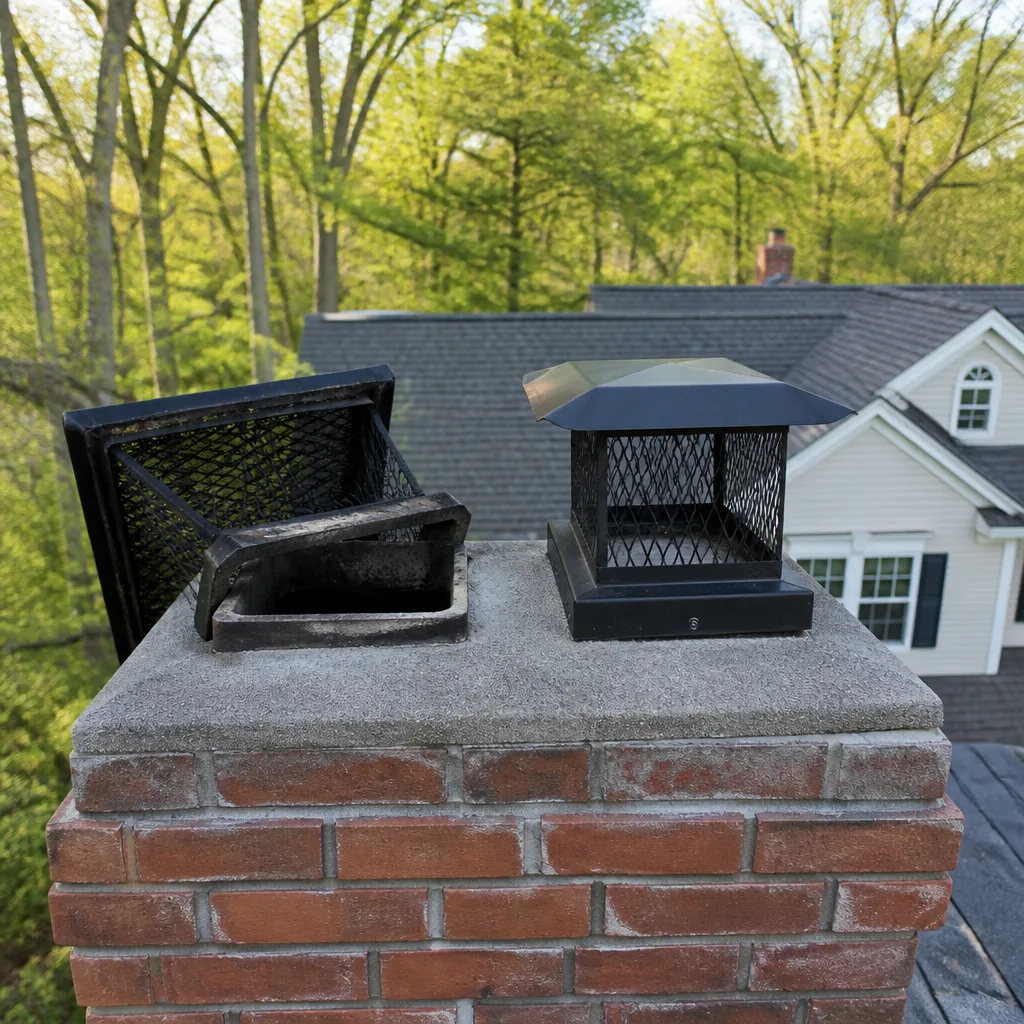
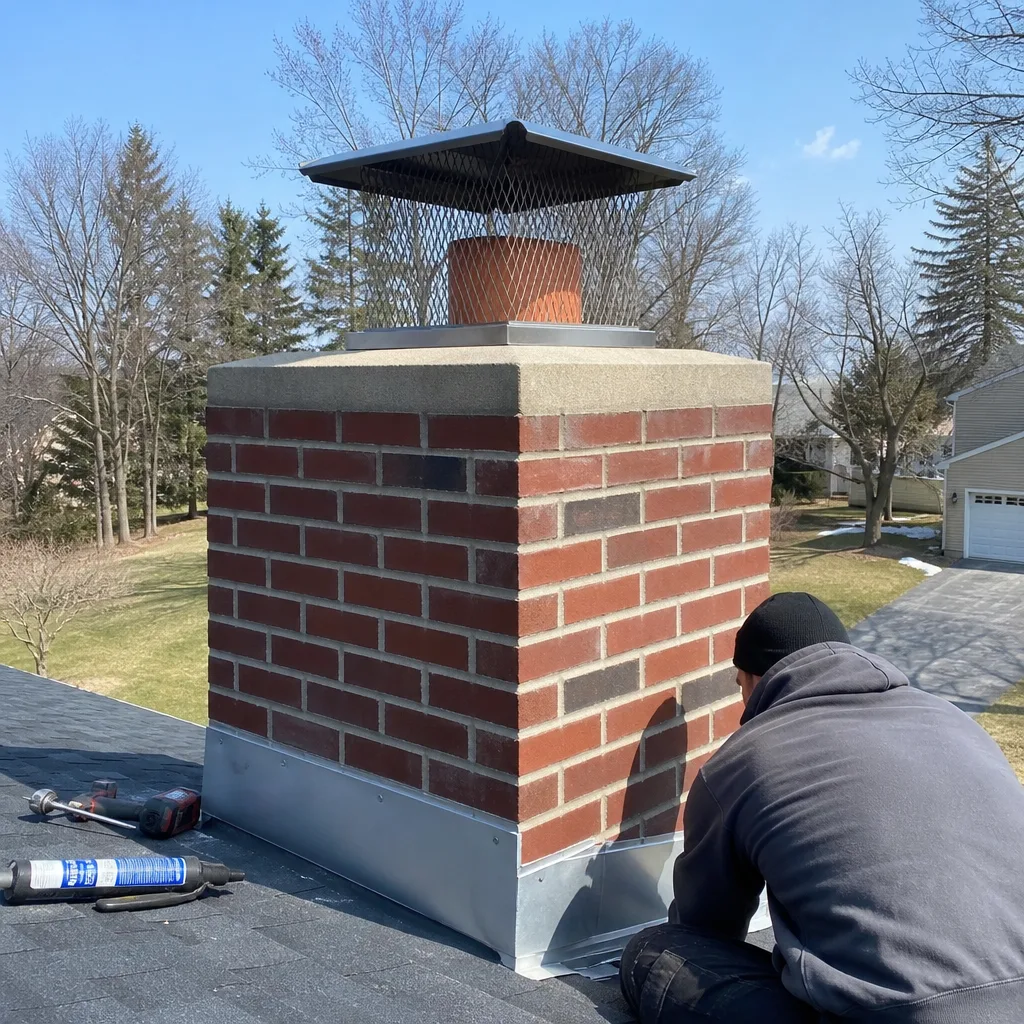
Level 1 sweep and inspection to the NFPA 211 annual standard - flue, crown, cap, and flashing checked and photographed
Chimney sweep logs do not sweep chimneys. They loosen some creosote - which then falls where a brush and vacuum still have to collect it.
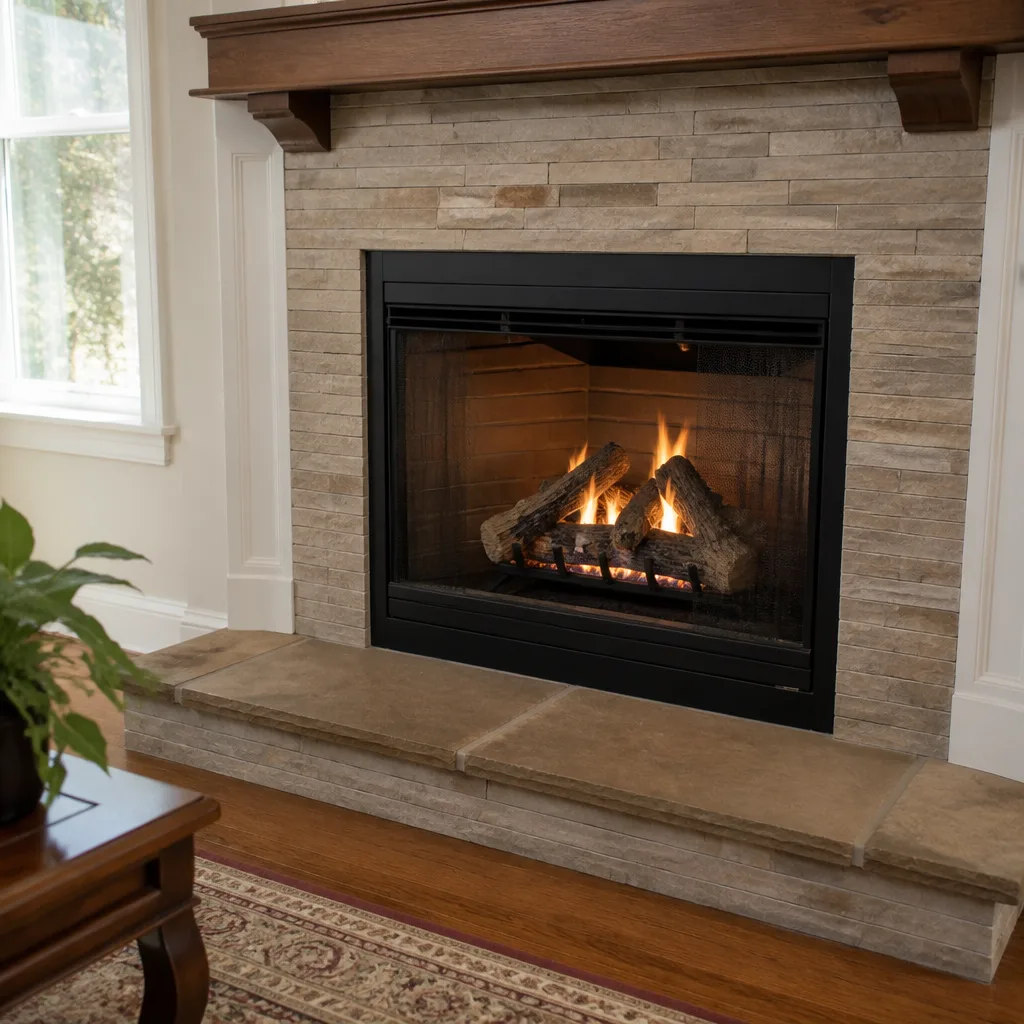
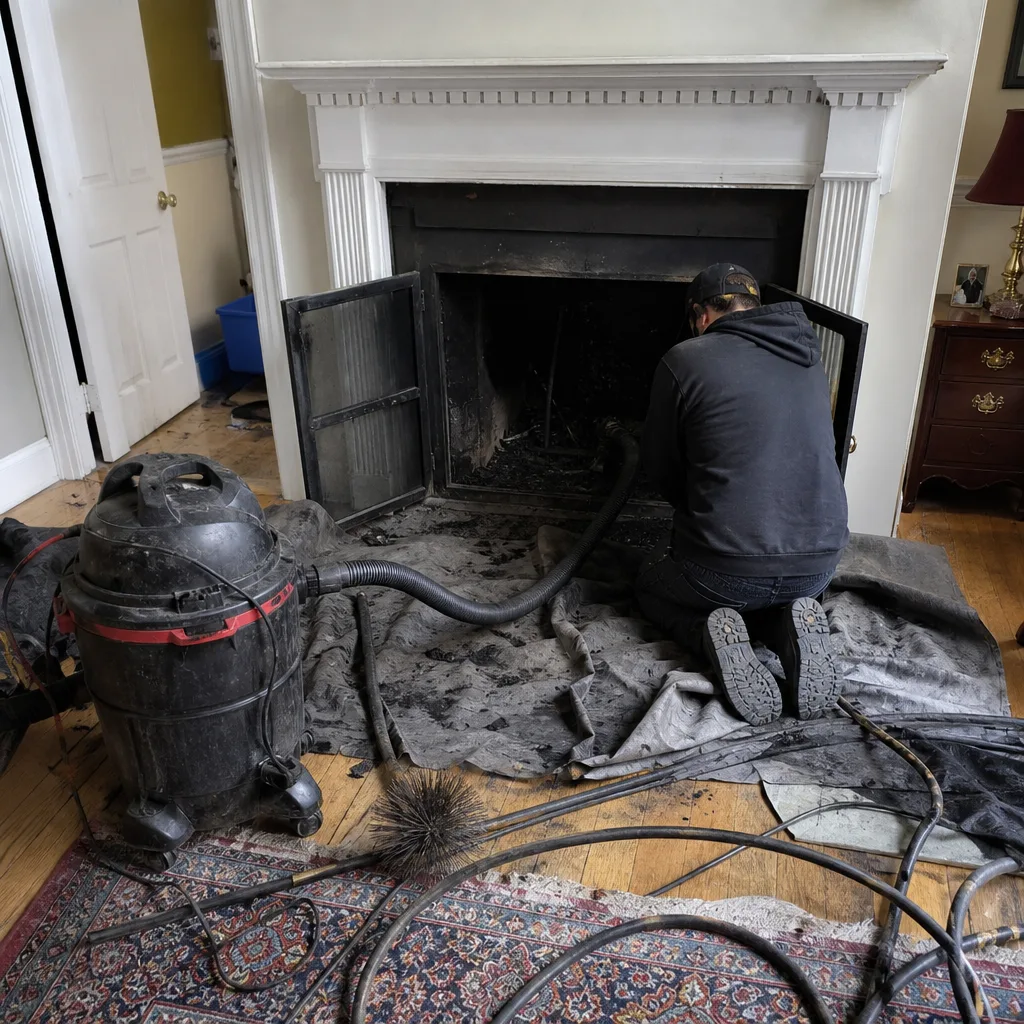 Before
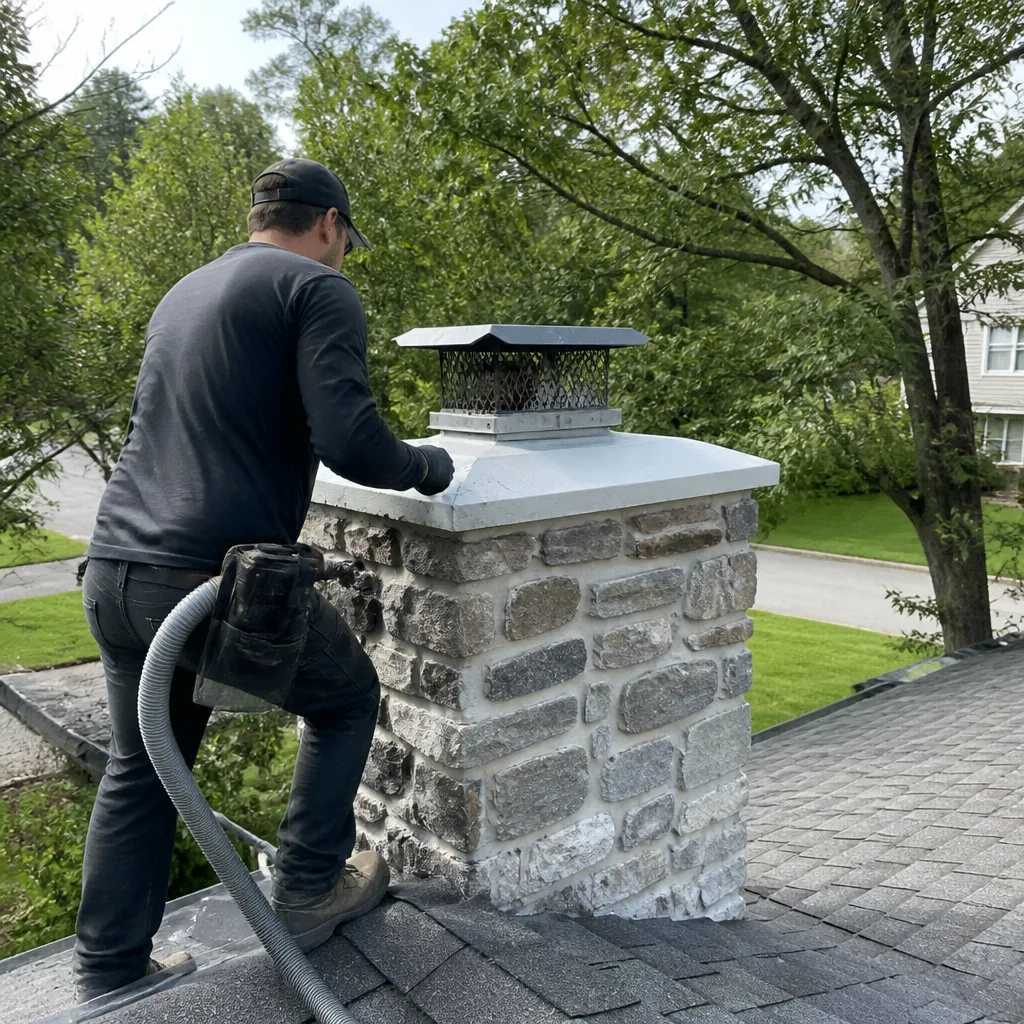 After
After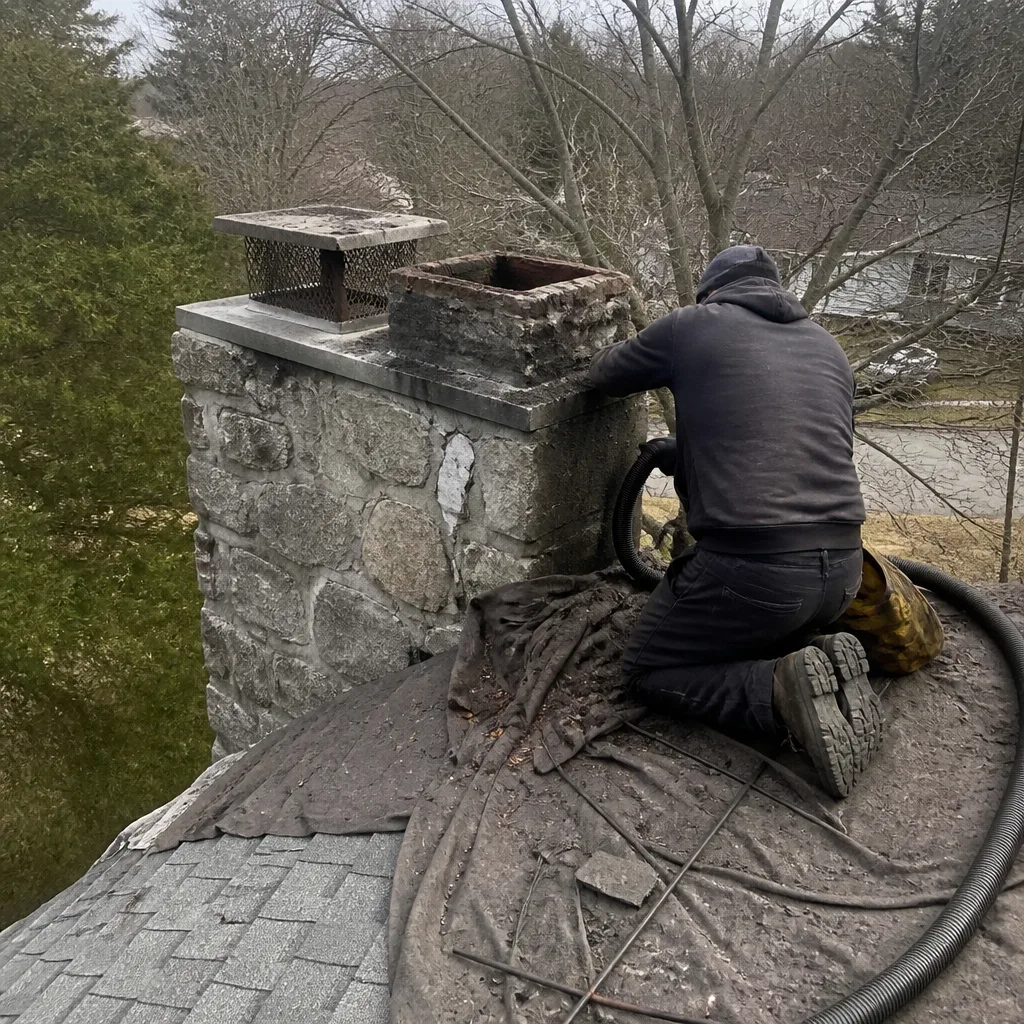 Before
 After
AfterThe Complete Guide to Chimney Cleaning in Chesterbrook
The National Fire Protection Association logged 44,210 chimney-related home fires in one recent reporting year, and the majority involved chimneys that had been “cleaned” but never camera-inspected. In Chesterbrook, where colonial-style homes with masonry fireplaces sit alongside newer builds with gas inserts, that distinction matters more than most homeowners realize. This guide maps every step of professional chimney cleaning so you’ll know exactly what was done, what it cost, and what documentation you should hold in your hand when it’s over. By the end, you’ll be able to tell a $79 coupon sweep from a documented Chimney Cleaning & Sweep in Chesterbrook that your insurer will actually accept after a fire.
Quick Answer
Professional chimney cleaning in Chesterbrook typically costs $189-$349 for a standard sweep with Level 2 camera inspection, and the job takes 60-90 minutes. A proper service includes a full flue scan with annotated footage, written findings, and a timestamped record you can submit to your insurance company. Anything less than a camera-documented inspection leaves you without proof that the work was actually performed to NFPA 211 standards.
Table of Contents
- What Chimney Cleaning Actually Includes
- The Three NFPA 211 Inspection Levels
- Chesterbrook Fuel Types and What They Mean for Cleaning
- What a Camera-Scan Sweep Actually Produces
- What Chimney Cleaning Costs in Chesterbrook
- Insurance Documentation: What to Keep and Why
- How to Choose a Chimney Sweep in Chesterbrook
- How Often Should Your Chesterbrook Chimney Be Cleaned?
 Before
 After
AfterWhat Chimney Cleaning Actually Includes
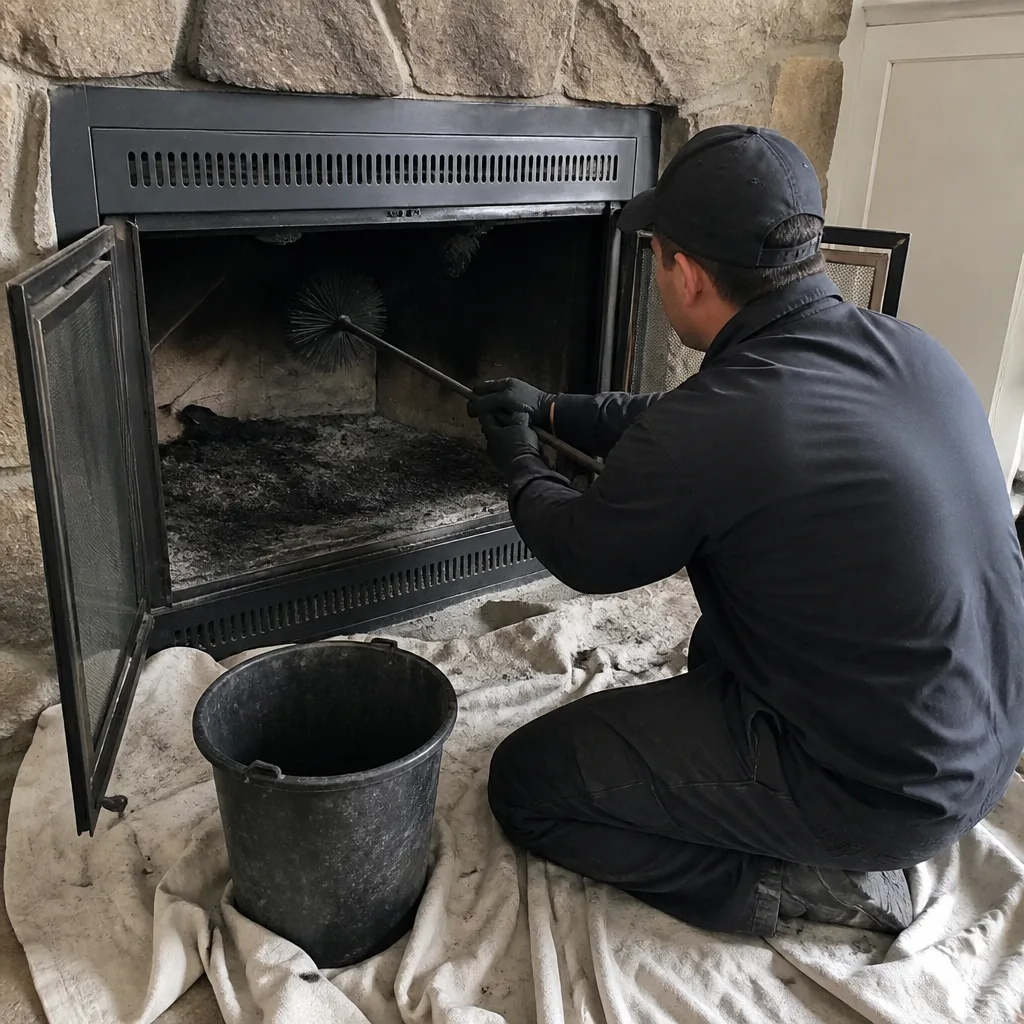
Most Chesterbrook homeowners picture a brush on a pole and some soot on the floor. That’s roughly one-third of the job. A complete chimney cleaning, properly executed, addresses the entire smoke path from firebox to cap - a distinction we explore in our DIY vs Professional Chimney Cleaning: The Chesterbrook Homeowner’s Decision Guide.
Here’s what happens in sequence:
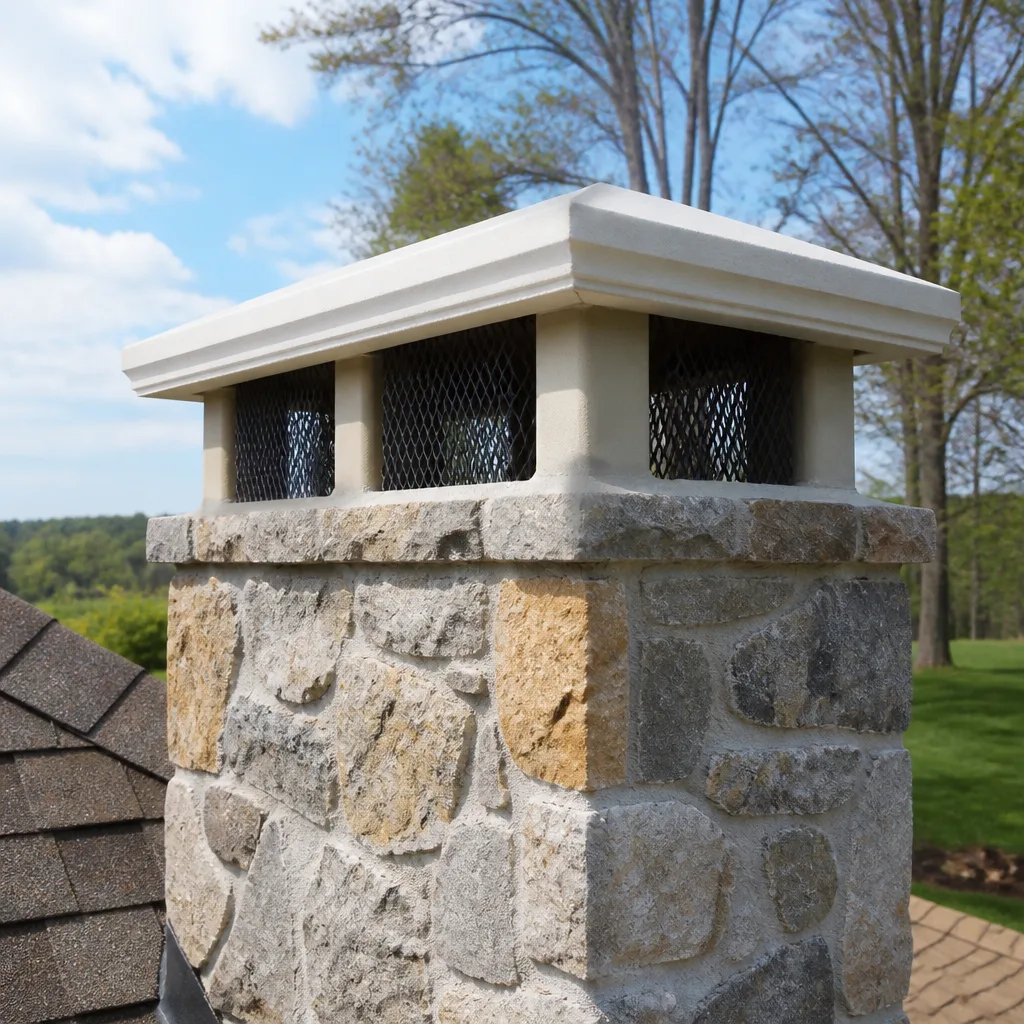
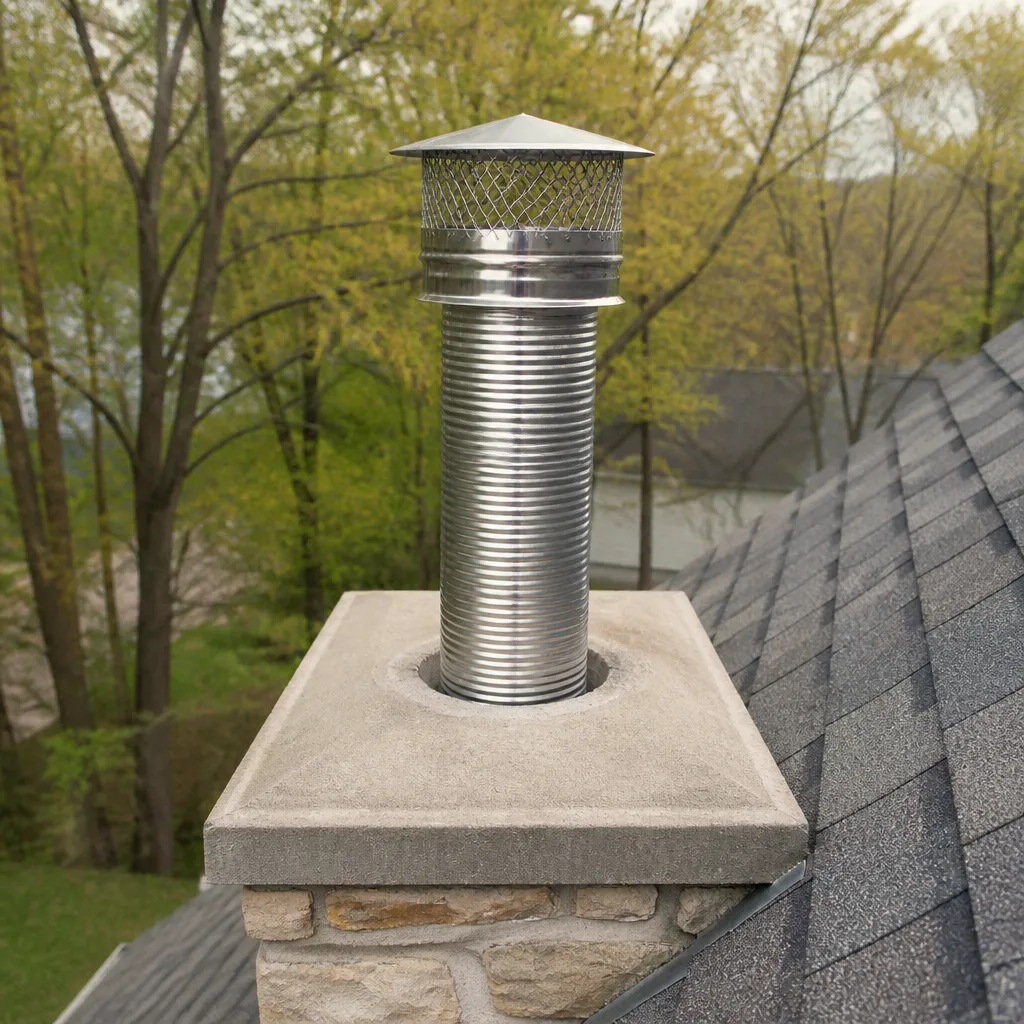
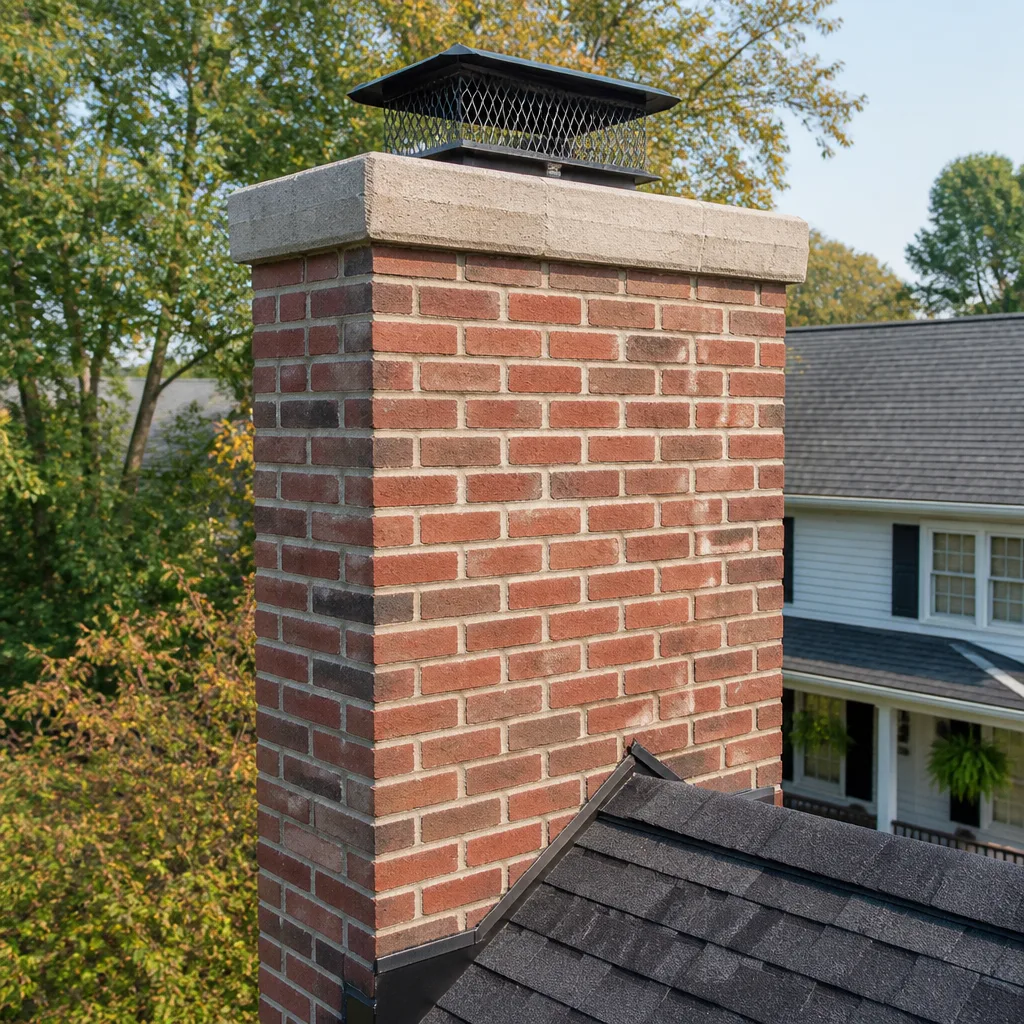
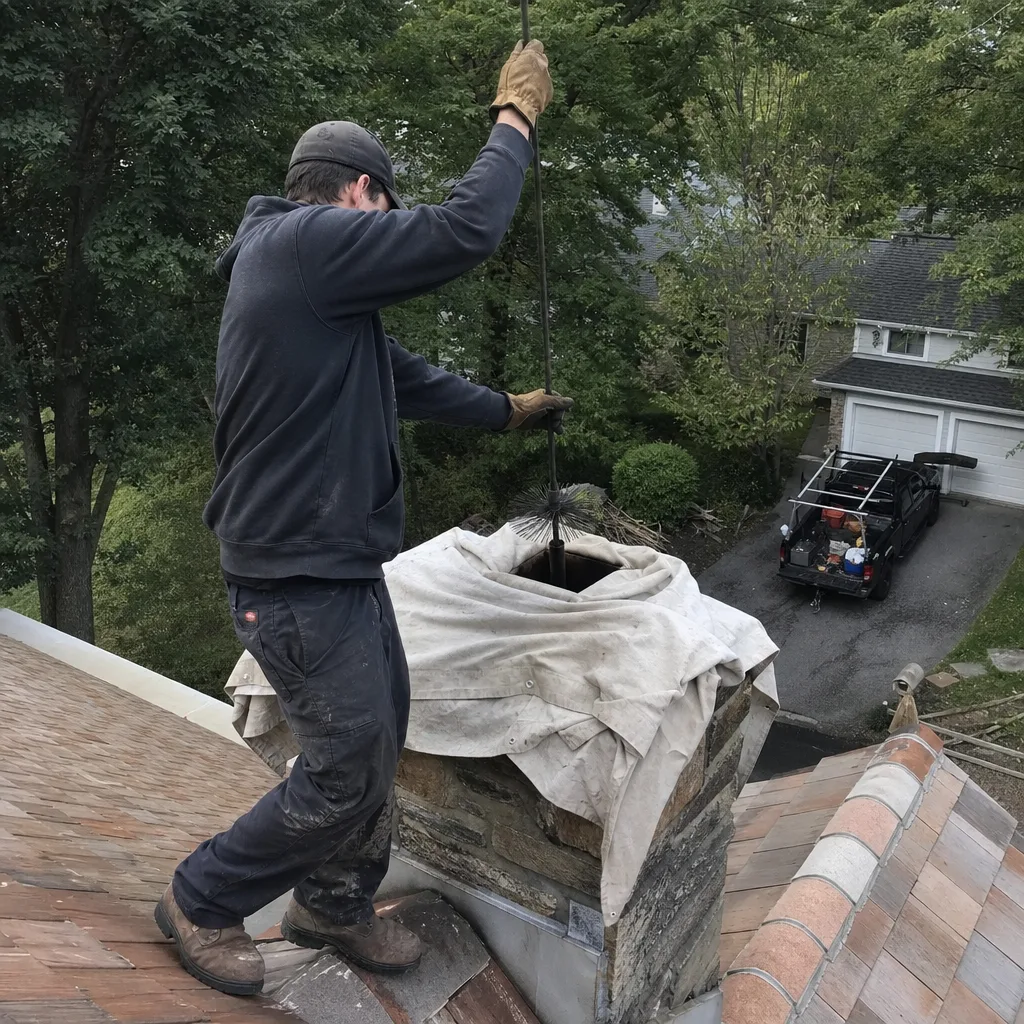
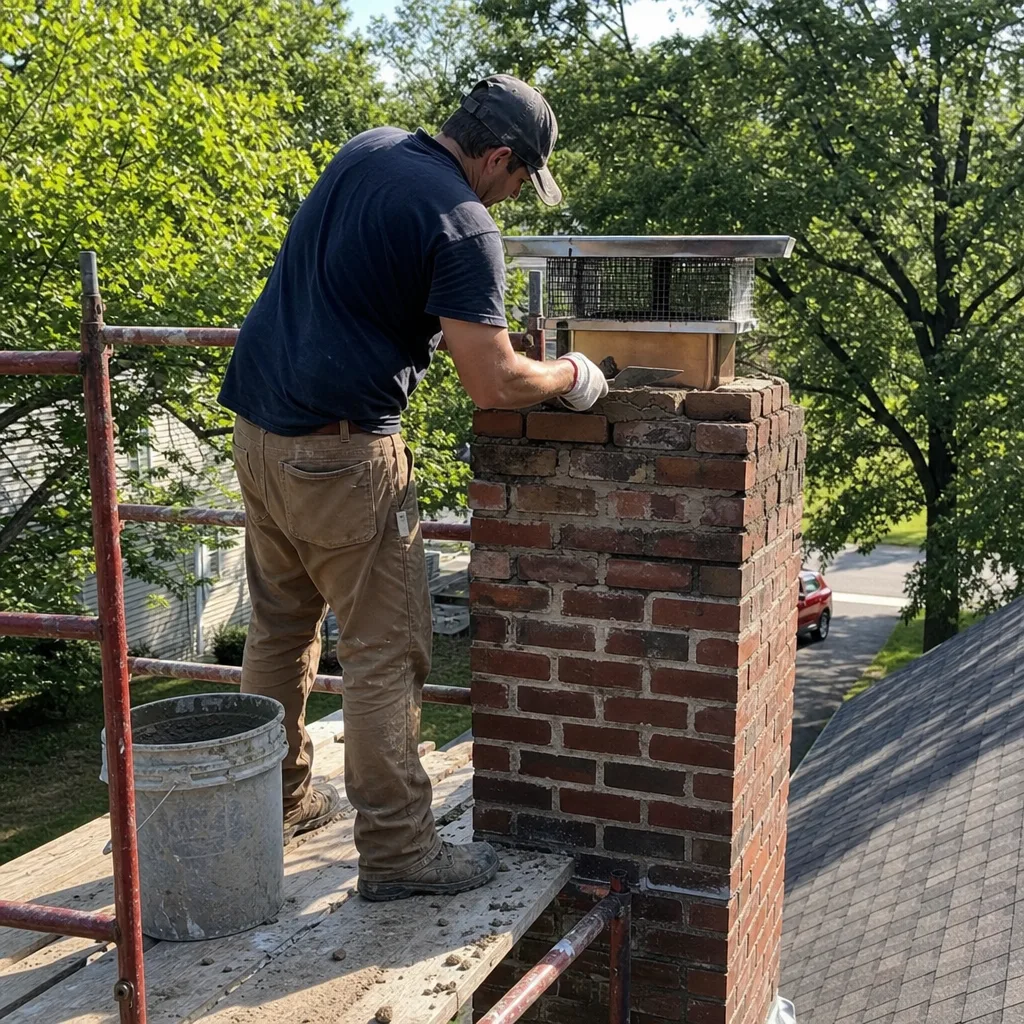
- Exterior assessment. We check the crown, cap, flashing, and visible masonry for cracks, spalling (surface flaking), or water damage before we ever enter the home. In Chesterbrook’s freeze-thaw climate, winter moisture penetration is the leading cause of crown deterioration we see.
- Interior firebox and smoke chamber inspection. The firebox walls, damper assembly, and smoke chamber (the angled passage above the damper) are examined for creosote buildup, cracked refractory panels, or missing mortar.
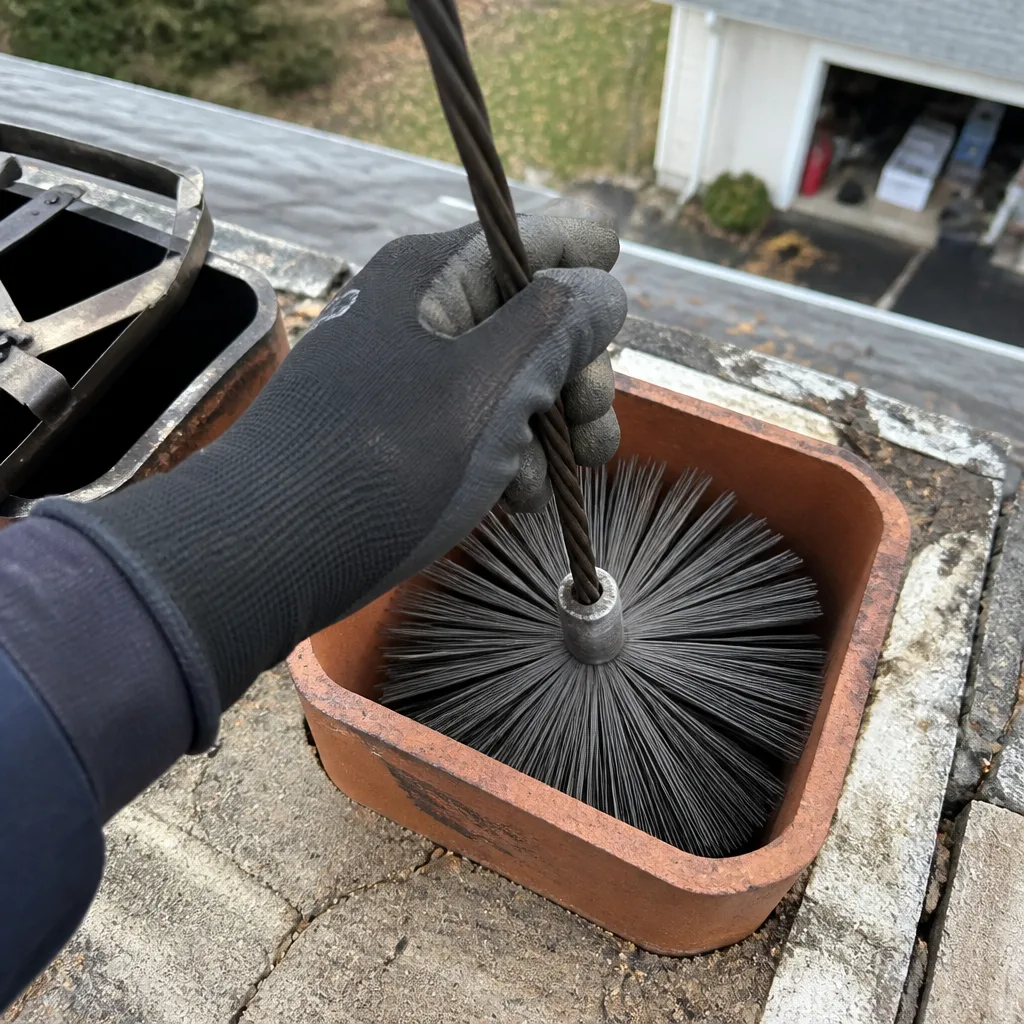
- Flue cleaning with rotary or polypropylene brushes. The flue liner is mechanically cleaned to remove creosote deposits, which range from sooty powder (Class I) to hardened glaze (Class III). Class III creosote, common in Chesterbrook’s older wood-burning installations, cannot be removed with standard brushing and requires specialized treatment.
- Camera-scan documentation. A high-resolution chimney camera is run the full length of the flue, capturing footage of liner condition, joints, offsets, and any hidden damage. This footage is archived under Haven Standard Clause 4, which we’ve followed since 2009.
- Debris removal and area protection. HEPA vacuums contain soot; drop cloths protect flooring. The work area is left cleaner than we found it.
- Written findings and price for any needed repairs. Before anyone packs up, you receive a written report with photo documentation, findings, and a fixed price for any recommended work. No verbal estimates. No “we’ll email you later.”
The difference between this and a basic sweep is the documentation. A brush-only service leaves you with a clean flue and nothing else. If a fire starts next season, you have no evidence that the chimney was ever inspected for the defects that caused it.
The Three NFPA 211 Inspection Levels
The National Fire Protection Association defines three inspection levels in NFPA 211, the standard that governs chimney safety in the United States. Most Chesterbrook homeowners have only ever received Level 1, often without knowing it.
Level 1: The Flashlight Look
A Level 1 inspection is a visual examination of readily accessible portions of the chimney exterior, interior, and appliance and chimney connection. The technician uses a flashlight, maybe a mirror, and examines what they can see without tools or special equipment. No camera. No roof access required. No documentation standard.
Level 1 is appropriate when:
- The appliance or venting system is being used exactly as it was in a previous inspection
- No changes have been made to the system
- No performance problems are suspected
Here’s the problem: in Chesterbrook’s housing stock, which includes homes built from the 1960s through new construction, conditions change constantly. Freeze-thaw cycles crack crowns. Settling shifts liners. Previous owners may have installed the wrong cap or damaged the flue with improper fuel. A flashlight look from the firebox catches none of this.
Level 2: The Camera-Scan Standard
Level 2 includes everything in Level 1 plus examination of accessible attics, crawl spaces, and basements, and a video scan of the interior flue surfaces. This is the inspection standard Level Two Chimney Chesterbrook home has performed on every job since 2009, and it’s what became Haven Standard Clause 4.
Level 2 is required when:
- Any changes are made to the system (new liner, new appliance, new fuel type)
- A home is sold or transferred
- An external event occurs (chimney fire, lightning strike, earthquake, building fire)
- Performance problems are suspected
In our experience across 38,000+ inspections, the defects that cause house fires - cracked flue liners, missing mortar joints, improper clearances - are almost always invisible from the firebox. They’re found by camera, or they’re found by the fire department.
Level 3: Destructive Inspection
Level 3 involves removing components of the building or chimney to gain access to concealed areas. This is only performed when a serious hazard is suspected and cannot be confirmed through Level 2 methods. We’ve recommended Level 3 fewer than 200 times in our history, always with a written explanation of why lesser methods were insufficient.
The gap between a $79 coupon sweep and a documented Level 2 inspection is measured in what your insurer will accept after a fire. Most insurance adjusters now specifically request Level 2 documentation for chimney-related claims. A receipt for “chimney sweep” with no inspection detail is increasingly treated as insufficient proof of maintenance.
Chesterbrook Fuel Types and What They Mean for Cleaning
Chesterbrook’s housing mix creates distinct cleaning profiles. The 1980s colonials near Wilson Farm Park often have original masonry fireplaces with clay flue liners. The townhome developments along Chesterbrook Boulevard frequently run gas inserts with direct venting. Newer construction near Valley Forge may have factory-built metal chimneys. Each requires different cleaning scope, different inspection focus, and different documentation.
Wood-Burning Fireplaces and Inserts
Wood-burning systems produce creosote, a tar-like combustion byproduct that accumulates on flue walls. Creosote is classified in three stages:
- Class I: Sooty, easily brushed away. Indicates dry, seasoned wood and hot fires.
- Class II: Crunchy, granular deposits. Requires more aggressive brushing but removes cleanly.
- Class III: Glazed, hardened coating, often described as “tar baked to glass.” Cannot be removed with standard brushes. Requires chemical treatment or mechanical removal with specialized chains or whips.
In Chesterbrook, we see Class III creosote most often in homes where homeowners burn unseasoned wood or restrict airflow to “make the fire last longer.” The moisture content of locally sourced firewood, often harvested from Pennsylvania’s hardwood forests and burned before proper seasoning, contributes significantly. We regularly find Class III buildup in the 1980s-era homes near Valley Creek, where original fireplaces see heavy winter use.
Wood-burning systems need annual inspection and cleaning when creosote exceeds 1/8 inch thickness. For heavy users, that may mean mid-season cleaning.
Gas Fireplaces and Inserts
Gas systems don’t produce creosote, but they do require cleaning and inspection. Combustion byproducts include moisture and acidic condensate that deteriorate metal liners and mortar joints. Ceramic logs degrade and can block ports. Direct vent terminations accumulate debris, spider webs, and insect nests - particularly in Chesterbrook’s wooded lots where Valley Forge National Historical Park borders residential areas.
Gas system cleaning focuses on:
- Burner port inspection and cleaning
- Log placement verification (misplaced logs cause sooting and CO risk)
- Vent termination clearance and obstruction check
- Heat exchanger and blower compartment cleaning
- Gas pressure and flame characterization
The documentation standard is identical: camera scan of the venting path, written findings, photo record. Gas systems may not have a traditional “flue” to clean, but the venting path still requires inspection under NFPA 54.
pellet Stoves and Multi-Fuel Systems
Pellet stoves, less common in Chesterbrook but present in some energy-conscious homes, require specialized cleaning of the exhaust vent, combustion chamber, and ash traps. The venting path is typically smaller diameter and more prone to ash accumulation. We use specific brush sizes and vacuum protocols for these systems, with documentation under the same Haven Standard Clause 4 requirements.
What a Camera-Scan Sweep Actually Produces
When we say “camera inspection,” we don’t mean a technician holding up a phone. We mean a dedicated chimney inspection camera - typically 120-160 degree field of view, LED lighting, on a flexible rod designed for flue navigation - producing footage that meets NFPA 211 Level 2 documentation requirements.
Here’s what you should receive:
- Annotated video footage. The camera run is recorded in full, with technician voiceover noting liner condition, joint alignment, creosote class, and any defects. Time stamps mark each observation.
- Still image captures. Key frames are extracted and annotated: “Clay liner joint offset at 12 feet,” “Spalling at 18 inches above smoke shelf,” “Class III creosote accumulation, 3-5mm.”
- Written findings report. A structured document summarizing inspection scope, findings by category (liner, crown, cap, masonry, clearances), and recommended actions with priority levels.
- Written price for any recommended work. Before any repair is performed, you receive a fixed price, written scope, and written warranty. This is Haven Standard Clause 1: “Have it in writing.”
- Archived record. At Level Two Chimney Chesterbrook, this record is maintained and accessible for future reference, insurance claims, or real estate transactions.
What you should not accept: a verbal “looks good,” a handwritten note with no photos, or a promise that “we’ll email the report.” Documentation is either in your hand when the technician leaves, or it doesn’t exist.
The practical value of this record became clear during the 2022 winter storm season, when a Chesterbrook homeowner on Charlestown Road needed to document chimney condition for an insurance dispute following ice dam damage. Their Level 2 record from 2021 showed pre-existing crown condition, distinguishing storm damage from deferred maintenance and saving them approximately $4,200 in disputed coverage.
What Chimney Cleaning Costs in Chesterbrook
We name prices on the page because “call for a quote” is how you end up with a technician in your living room before you know what anything costs. Here’s the Chesterbrook market as we’ve tracked it:
| Service | Price Range | What’s Included |
|---|---|---|
| Standard sweep with Level 2 inspection | $189 – $349 | Full cleaning, camera scan, written report, photo record |
| Gas fireplace service and inspection | $159 – $279 | Burner cleaning, log check, vent inspection, written report |
| Class III creosote removal | $289 – $549 | Chemical treatment or mechanical removal, follow-up inspection |
| Chimney cap installation (standard) | $249 – $449 | Stainless steel cap, installation, warranty |
| Crown repair (minor) | $349 – $699 | Crown coat or patch, documentation |
| Full liner inspection with scan | $229 – $389 | Camera run full liner length, condition assessment, written findings |
Factors that move you within these ranges:
- Accessibility. Steep roofs, multiple flues, or obstructed access add time and equipment needs.
- Appliance type. Insert removals require additional labor for proper cleaning access.
- Condition severity. Heavy Class III creosote or significant debris accumulation extends cleaning time.
- Documentation requirements. Real estate transactions or insurance claims may require additional report formatting.
What we don’t do: surprise pricing, hourly rates with open-ended totals, or “while we’re here” add-ons without written authorization. Every price is fixed before work starts. Every warranty is written. That’s Haven Standard Clause 1.
For comparison context: the $79 coupon sweeps advertised in Chesterbrook area mailers typically perform Level 1 visual inspection only, exclude camera work, and produce no documentation suitable for insurance or real estate purposes. The true cost difference isn’t $79 versus $249 - it’s $79 versus $249 plus the value of documentation that actually protects you.
Insurance Documentation: What to Keep and Why
Homeowner’s insurance policies increasingly contain specific language about chimney maintenance and documentation. After a chimney fire or related damage, adjusters routinely request:
- Proof of professional inspection within the policy-specified timeframe (typically 12 months)
- Documentation of inspection scope (Level 1, 2, or 3)
- Evidence that identified defects were addressed
- Qualifications of the inspecting technician
A receipt reading “chimney sweep – $150” satisfies none of these requirements. An NFPA 211 Level 2 report with annotated camera footage, written findings, and technician credentials satisfies all of them.
We’ve assisted Chesterbrook homeowners with insurance documentation for claims ranging from crown leak damage to full chimney fires. In every case, the determining factor was the quality of the inspection record. Homeowners with documented Level 2 inspections received coverage determinations faster and with fewer disputes. Those with basic sweep receipts faced extended investigation, partial denial, or requirements for additional professional assessment at their own expense.
What to keep: The full written report, all photo documentation, the technician’s business card or credential information, and your invoice showing date and scope of work. Store these with your other home maintenance records. If you sell your Chesterbrook home, this documentation transfers to the buyer and may be required by their insurer.
Haven Standard Clause 4 requires that we maintain our own archive of your inspection record, but your personal copy is your first line of defense in any dispute.
How to Choose a Chimney Sweep in Chesterbrook
The chimney service industry in southeastern Pennsylvania includes certified professionals, seasonal operators, and referral networks that dispatch subcontractors with varying qualifications. Here’s how to distinguish them, and for deeper guidance see our How to Hire a Chimney Cleaning Contractor in Chesterbrook: A Step-by-Step Guide.
Verify the Inspection Standard
Ask specifically: “Will this include a Level 2 camera inspection per NFPA 211?” If the answer is hesitation, “we’ll see what we find,” or “our basic service doesn’t include video,” you are buying Level 1. That may be appropriate in limited circumstances, but you should know what you’re purchasing.
Demand Written Price Before Work
Any technician who enters your home without a written price, written scope, and written warranty is operating outside the standard we established in 2009. This isn’t negotiable. If they say “we can’t know until we look,” they can certainly provide a range and a firm quote after looking - before starting work.
Our Free Second Opinion on Any Written Estimate exists precisely because we encounter homeowners who received verbal “discoveries” mid-job that multiplied their cost. Bring us any competitor’s written quote. We’ll review it against what we find and give you a fixed alternative.
Check for Real Documentation
Ask to see a sample report before booking. A professional operation should be able to show you:
- Sample camera footage quality
- Report formatting and detail level
- How findings are described and prioritized
- What warranty language is included
Confirm Technician Identity
Background-checked, uniformed technicians with license information displayed are standard at Level Two Chimney Chesterbrook. You receive a text when your technician is en route, with name and photo. This is Haven Standard “Verified crews” and “Arrive on schedule.”
Ask About Materials and Sourcing
For any repair work, ask where materials are sourced. We procure through Haven’s buying network from established manufacturers: DuraFlex for stainless steel liners, HeatShield for cerfractory resurfacing, Gelco for caps and accessories, Olympia Chimney for liner systems, Famco for ventilation products, and Copperfield for specialty items. This network exists specifically to keep customer prices honest by eliminating markup layers.
How Often Should Your Chesterbrook Chimney Be Cleaned?
NFPA 211 recommends annual inspection for all chimney systems. Cleaning frequency depends on use and fuel type - timing we cover in our Seasonal Chimney Cleaning Care for Chesterbrook: Year-Round Homeowner’s Guide.
| System Type | Inspection | Cleaning |
|---|---|---|
| Wood-burning, regular use (3+ times weekly) | Annual | Annual, or when creosote exceeds 1/8 inch |
| Wood-burning, occasional use | Annual | Every 1-2 years, or per inspection findings |
| Gas fireplace | Annual | Annual service and vent check |
| Pellet stove | Annual | Per manufacturer schedule, typically annual |
| Oil or gas furnace flue | Annual | Per inspection findings |
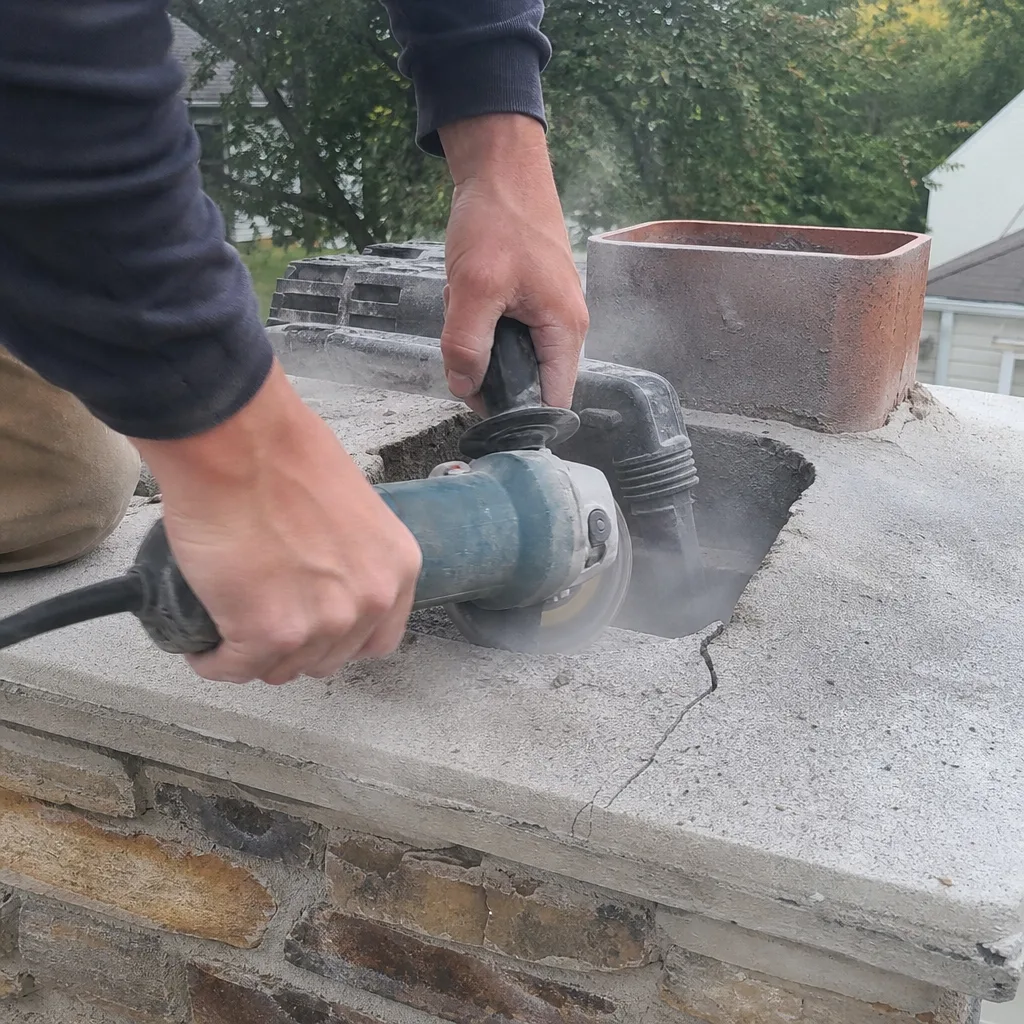
Chesterbrook’s climate adds specific considerations. Our freeze-thaw cycles, with temperatures swinging from single digits to 50+ degrees through winter, accelerate masonry deterioration. The area’s mature tree canopy, particularly in neighborhoods near Valley Forge, contributes to debris accumulation and moisture retention. Homes in low-lying areas near Valley Creek may experience higher ambient moisture that affects drying times after cleaning.
We recommend scheduling inspection in late summer or early fall, before the burning season begins. This allows time for any needed repairs before temperatures drop and contractors’ schedules fill. Spring inspection is also valid, particularly if you’ve had heavy winter use and want to address any accumulation before it sets through the humid summer months.
Common Mistakes to Avoid
- Booking on price alone. The $79 sweep that produces no documentation costs more than the $249 service with full Level 2 record when you need to prove maintenance to an insurer.
- Assuming gas doesn’t need inspection. Gas systems don’t produce creosote, but they do produce acidic condensate, deteriorate components, and pose carbon monoxide risks from blocked vents or degraded seals.
- Ignoring the crown and cap. Water entry through a cracked crown or missing cap destroys chimneys from the top down. In Chesterbrook’s climate, crown maintenance often prevents $3,000+ rebuilds.
- Using unseasoned firewood. Pennsylvania hardwood needs 12-18 months drying time. Burning wet wood creates Class III creosote rapidly and increases cleaning costs significantly.
- Accepting verbal estimates for repairs. Any recommended work should come with written price, scope, and warranty before proceeding. Verbal “while we’re here” pricing is a known industry tactic for inflated bills.
- Skipping inspection after a chimney fire. Even a small chimney fire damages liner integrity. A Level 3 inspection is often warranted to assess hidden thermal damage.
- Not keeping documentation. Your inspection record has value for insurance, real estate sale, and warranty claims. File it with your home maintenance records, not in the recycling bin.
When to Call a Professional
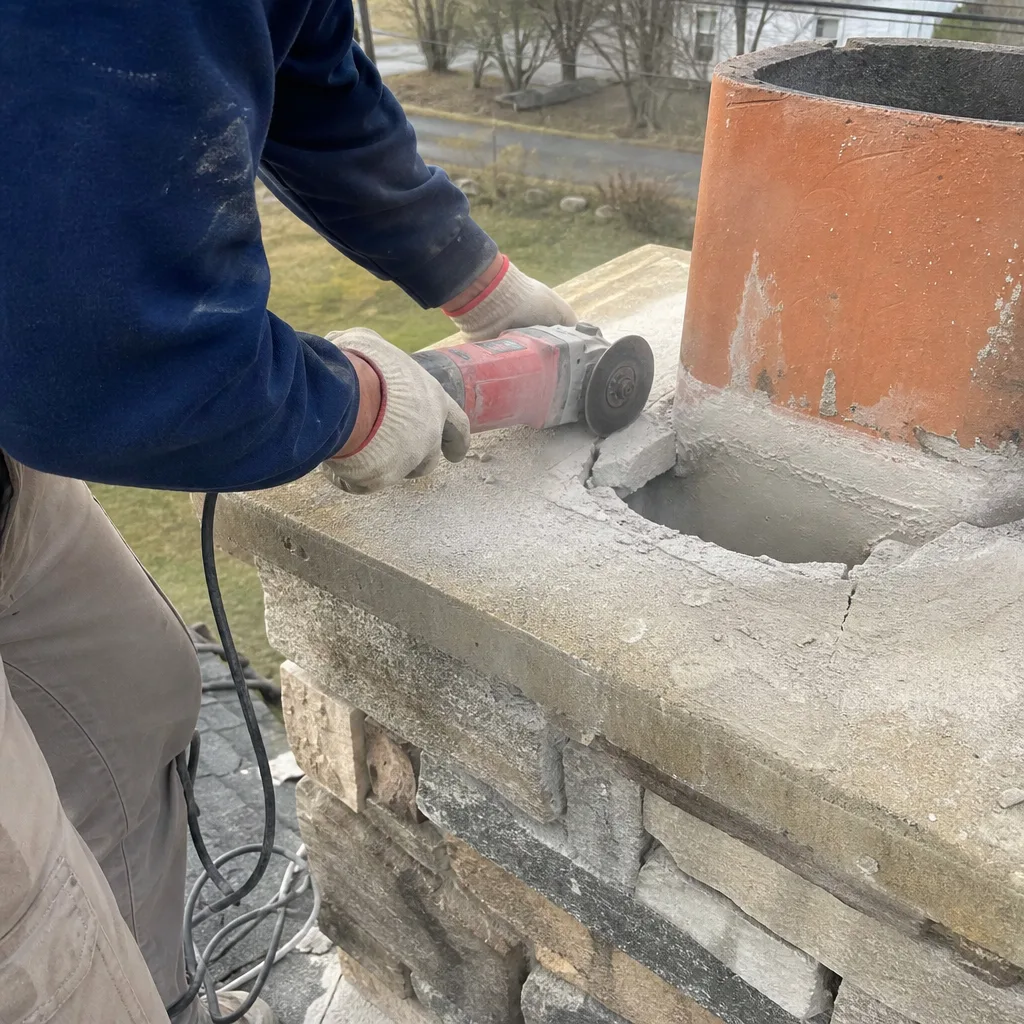
Call for inspection if you notice any of the following: visible creosote flakes in the firebox, smoke entering the room during use, a strong odor from the fireplace in warm weather, white staining on exterior masonry (efflorescence indicating moisture intrusion), or any change in draft performance. After any chimney fire, lightning strike, or significant weather event, Level 2 inspection is warranted regardless of apparent damage.
If you’re buying a home in Chesterbrook, require Level 2 inspection as a contingency. If you’re selling, having current documentation smooths transaction negotiations and prevents last-minute repair demands.
Chimney Repair in Chesterbrook becomes necessary when inspection finds active deterioration. Level Two Chimney Chesterbrook offers free estimates in Chesterbrook - call (484) 806-9176. We’ll perform a full Level 2 inspection, show you exactly what we found on camera, and provide a written price before any repair work is discussed.
Frequently Asked Questions
A standard chimney sweep with Level 2 camera inspection in Chesterbrook typically runs $189-$349, depending on system accessibility and condition. Gas fireplace service ranges $159-$279. Class III creosote removal or heavy debris conditions may extend to $289-$549. We provide a written, fixed price before any work begins - call (484) 806-9176 for an exact quote; estimates are free. For more guides & resources, visit our blog.
You need a new liner when inspection documents that the existing liner is cracked, separated, improperly sized, or missing entirely - conditions that create fire or carbon monoxide hazards. We don’t recommend liner replacement without camera evidence you can see for yourself, and we’ll tell you plainly when a condition can be monitored rather than immediately replaced. Our materials, including DuraFlex stainless steel and Olympia Chimney systems, are sourced through Haven’s buying network to keep pricing transparent.
NFPA 211 requires annual inspection for all chimney systems. Wood-burning fireplaces used regularly need annual cleaning, or more frequently if creosote exceeds 1/8 inch. Gas systems need annual service and vent inspection even though they don’t produce creosote. Chesterbrook’s freeze-thaw climate and mature tree cover make fall scheduling ideal for identifying weather-related deterioration before the burning season.
Skipped maintenance leads to creosote accumulation, which reduces flue diameter and increases fire risk. Class III creosote ignites at approximately 451°F - well within normal operating temperatures. Deferred inspection also misses cracked liners, crown damage, and cap failures that allow water entry, progressively destroying masonry from the top down. The cost of prevention is consistently lower than the cost of remediation or, in worst cases, rebuilding after a fire.
A sweep is the mechanical cleaning of the flue. An inspection is the systematic evaluation of the entire system, including areas inaccessible without specialized equipment. A sweep without inspection is like washing your car without checking the brakes. Level Two Chimney Chesterbrook performs both together as standard practice, with camera documentation under Haven Standard Clause 4.
Homeowners can perform basic firebox cleaning and ash removal. Flue cleaning requires proper brushes, rods, and vacuum equipment sized to your liner type. More importantly, without camera inspection, you cannot assess liner condition, joint integrity, or hidden defects that create fire and CO hazards. For Chesterbrook’s masonry chimneys, particularly those with clay tile liners in homes from the 1970s-1990s, professional evaluation is strongly recommended. We do not provide DIY instructions for flue access or roof work due to fall and injury risk.
The Bottom Line
Chimney cleaning in Chesterbrook is not a single service with a single price. It’s a spectrum from brush-only sweeps with no documentation to fully documented Level 2 inspections that satisfy NFPA 211, insurance requirements, and real estate transactions. The gap between them is measured in what you can prove was done, what defects were found, and what protection you have if something goes wrong.
Since 2009, Level Two Chimney Chesterbrook has performed every inspection and cleaning to the Haven Standard: written price before work starts, background-checked uniformed technicians, camera-scan documentation on every visit, and the 365-Day Done Right Promise. We’ve completed more than 38,000 chimney services, every one with a written record.
If your Chesterbrook home has a fireplace, insert, or heating appliance with a chimney, it needs annual inspection. The documentation you keep is your protection. The quality of that documentation determines whether it actually works when you need it.
Call (484) 806-9176 for a free estimate. We’ll show you exactly what we find, name a fixed price before any work begins, and leave you with a documented record you can use.
Written by Corrine Halstead, Owner at Level Two Chimney Chesterbrook, serving Chesterbrook since 2009.